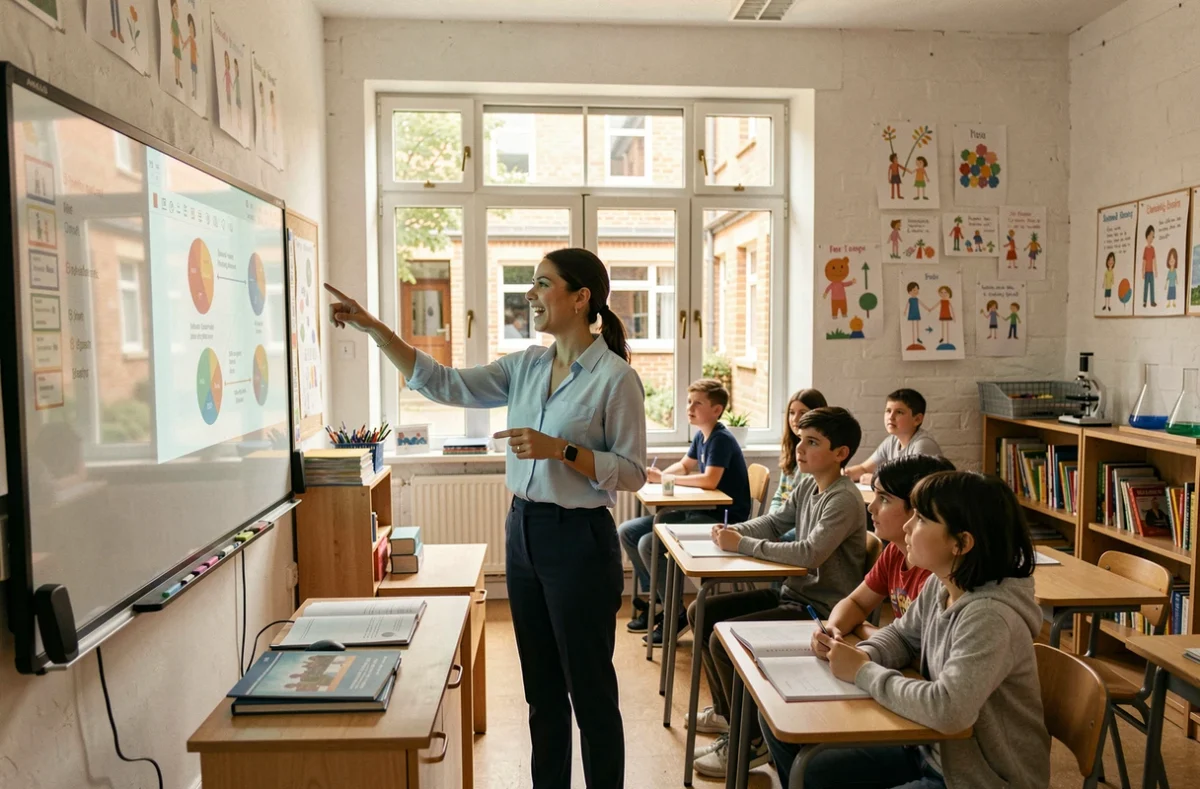
Two simultaneous movements are reshaping educational news this school year: the scheduled introduction of mandatory AI education and the massive reinforcement of mobile phone bans in schools. These trajectories, supported by recent data from UNESCO and French government announcements, outline a school landscape in tension between technological openness and usage restrictions.
AI and mobile phones in school: two opposing trajectories in numbers
| Measure | Scope | Deadline or current status |
|---|---|---|
| Mandatory AI education in 10th grade | France | Start of the 2027 school year (programs and training from 2026) |
| AI learning in middle school (starting from 8th grade) | France | Announced guidelines, schedule in progress |
| Supervised pedagogical use of generative AI starting from 8th grade | France | Allowed under teacher supervision |
| National ban on mobile phones in schools | Worldwide (UNESCO GEM report, September 18, 2026) | 114 educational systems (compared to less than a quarter in 2023) |
The contrast between these two columns summarizes the situation. On one hand, France is making a shift towards AI learning starting in secondary school. On the other hand, the international community is accelerating restrictions on screens in the classroom.
The publications available on edunews.fr allow for tracking these developments as institutional announcements and feedback from the field unfold.

Teaching artificial intelligence in France: a tight schedule
The French government has confirmed the establishment of mandatory AI education in 10th grade starting in 2027. The preparation of programs and teacher training will begin in 2026. This schedule imposes a sustained pace on the academies, which must identify trainers, adapt standards, and equip classrooms.
In middle school, guidelines foresee AI learning starting from 8th grade. The framework remains more flexible: it is not a dedicated subject, but an integration into existing disciplines.
An age-based framework rather than a ban
The French directives have opted for a graduated approach to generative AI in the school environment. Starting from 8th grade, limited pedagogical use is allowed, provided it is explained and accompanied by the teacher. In high school, autonomous use is possible within an explicitly defined learning framework.
This choice contrasts with the positions of some countries that favor outright bans. France bets on critical understanding rather than avoidance, placing teachers on the front lines to distinguish between productive use and misuse.
- In 8th and 9th grades: the teacher guides each interaction with the tool, explains possible biases, and checks the results produced
- In 10th grade: a dedicated program covers the technical fundamentals of AI (data, algorithms, limitations)
- In general and technological high school: the student can use generative AI independently, within the scope set by the teacher
Mobile phone ban: the global shift documented by UNESCO
The UNESCO GEM report published on September 18, 2026, provides a striking statistic: 114 educational systems now have a national ban on mobile phones in schools. In the first follow-up conducted in 2023, less than a quarter of countries had adopted such a measure.
This acceleration reflects a growing consensus on the effects of digital distraction in the classroom. Countries that have adopted these bans cover very different contexts, from European educational systems to Southeast Asian countries, making it difficult to attribute the trend to a single cultural factor.
An apparent paradox with the promotion of AI
Restricting phones while generalizing AI learning may seem contradictory. In reality, the two measures target distinct problems. The phone ban aims at passive distraction (social media, messaging). AI education focuses on the active understanding of a structuring technology.
The distinction lies in the context of use: unregulated consumption versus supervised learning. A student who uses a chatbot to rephrase their homework without understanding the mechanism acquires nothing. The same student, guided by a teacher who breaks down how the model works, develops a critical perspective.
Governance of educational data: the emerging point of tension
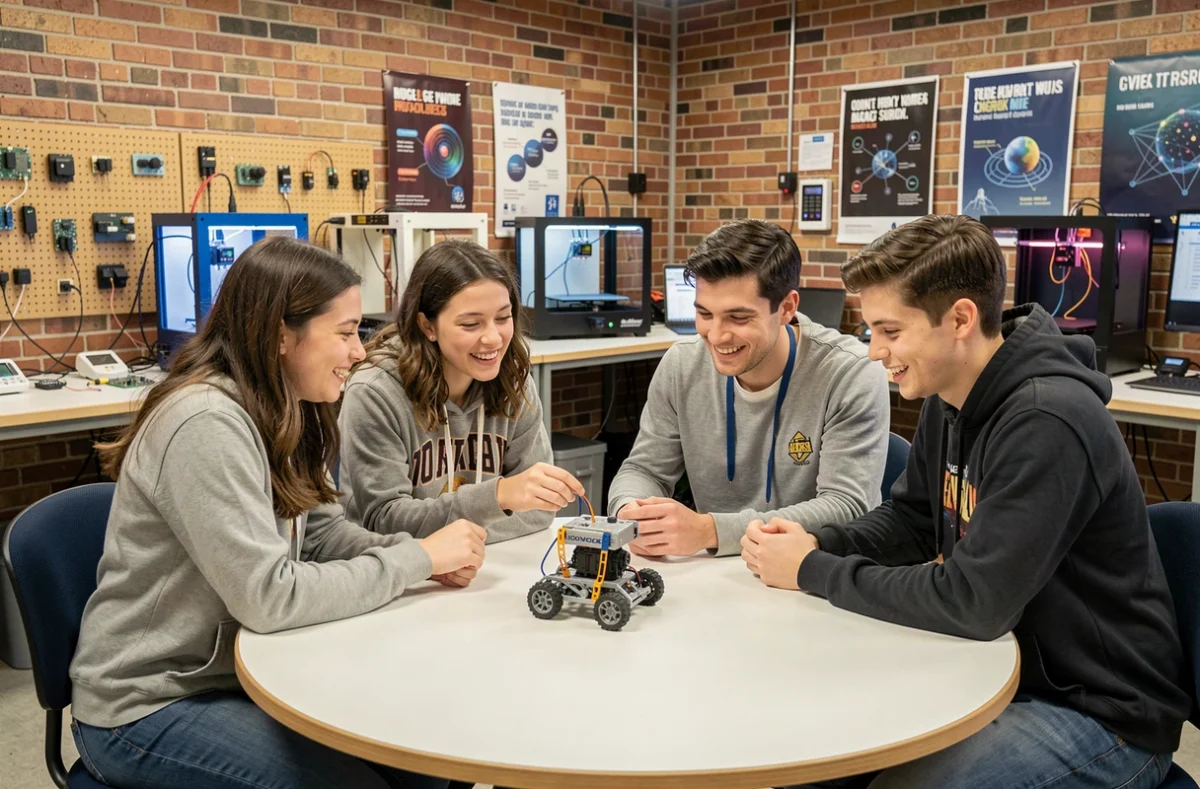
A ministerial statement from UNESCO, presented on September 8, 2026, highlighted a less publicized issue: the governance of data and dependence on providers in educational AI. The text calls for making AI systems auditable and data portable.
Behind this technical formulation lies a concrete problem. When an institution adopts an adaptive learning platform powered by AI, student data (results, response times, navigation paths) are stored by the provider. If the institution changes providers, this data may not be recoverable.
Portability and auditability as selection criteria
For educational decision-makers, two criteria become crucial when purchasing digital tools:
- Auditability: the ability to verify how the algorithm makes its decisions (content recommendations, automated assessment, grouping students by level)
- Portability: the ability to export data in a standard format if the institution wishes to migrate to another tool
- Contractual transparency: clauses specifying who owns the data, how long it is retained, and for what purposes it can be reused
These requirements, promoted internationally by UNESCO, could eventually become prerequisites in French public educational markets.
The educational news this school year outlines a school system that does not reject technology but attempts to set the conditions for its entry into the classroom. The transition to structured AI education by 2027, combined with the multiplication of phone bans and the initial frameworks for data governance, places institutions in front of concrete trade-offs whose effects on learning will only be measurable in several years.