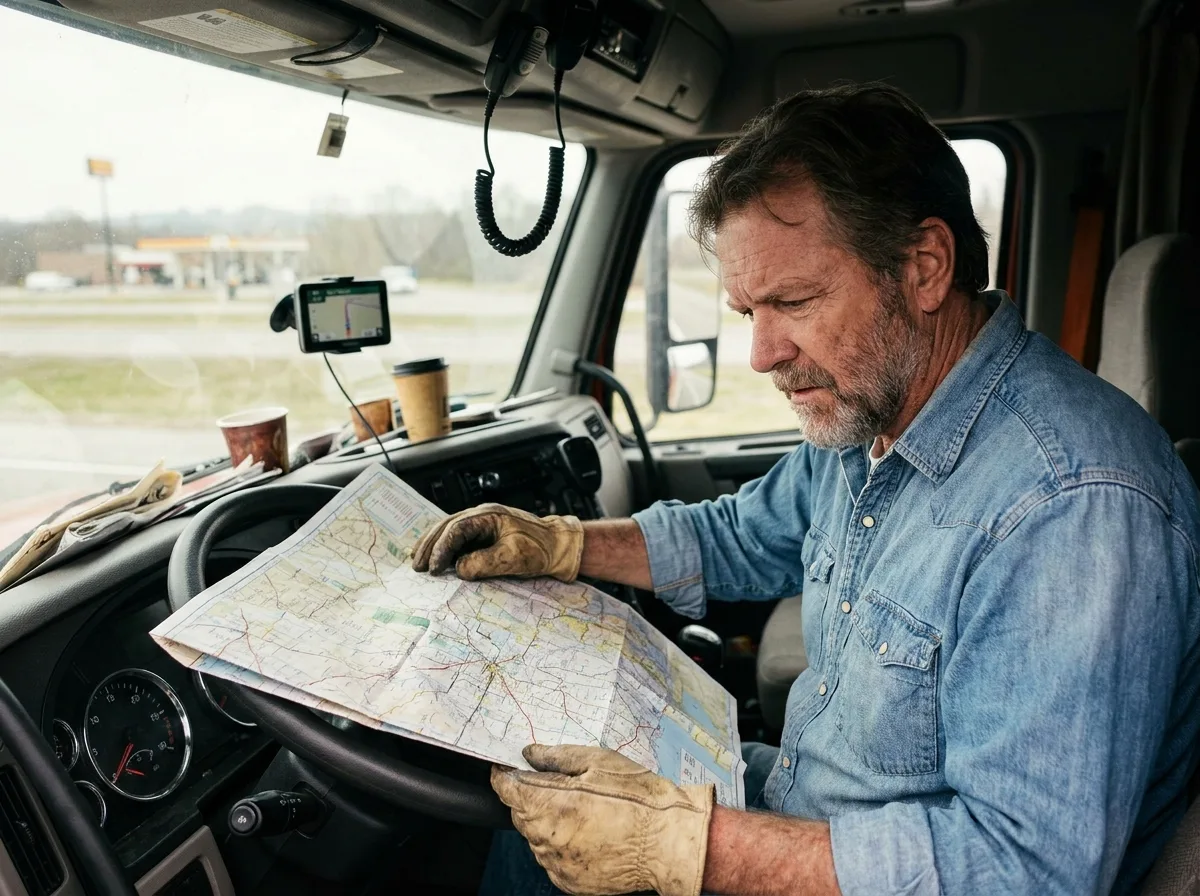
A truck that travels several extra kilometers per trip to bypass an poorly anticipated area means burned fuel, consumed driving time, and a weakened delivery slot. Reducing these unnecessary detours requires working on route planning, but also understanding why drivers deviate from planned routes and under what conditions they are willing to change their driving habits.
Why truck drivers take avoidable detours
A detour is not always a navigation error. In many cases, the driver knows a road they have been using for years and prefers a familiar route to one recalculated by software. This reflex is based on concrete logic: the usual road offers landmarks (stations, safe parking, known rest areas) that the optimized route does not guarantee.
The other common cause relates to poorly integrated height or weight restrictions in routing tools. Public applications like Google Maps do not take into account the height, weight, or length of a heavy vehicle. The driver, faced with an impassable route, improvises a bypass. This type of detour is rarely reported to the fleet manager, preventing any upstream correction.
Truck geolocation systems allow for cross-referencing the planned route with the actual route taken, identifying recurring discrepancies. This visibility is not used for punishment: it serves to understand where planning fails and to correct the structural causes of detours.
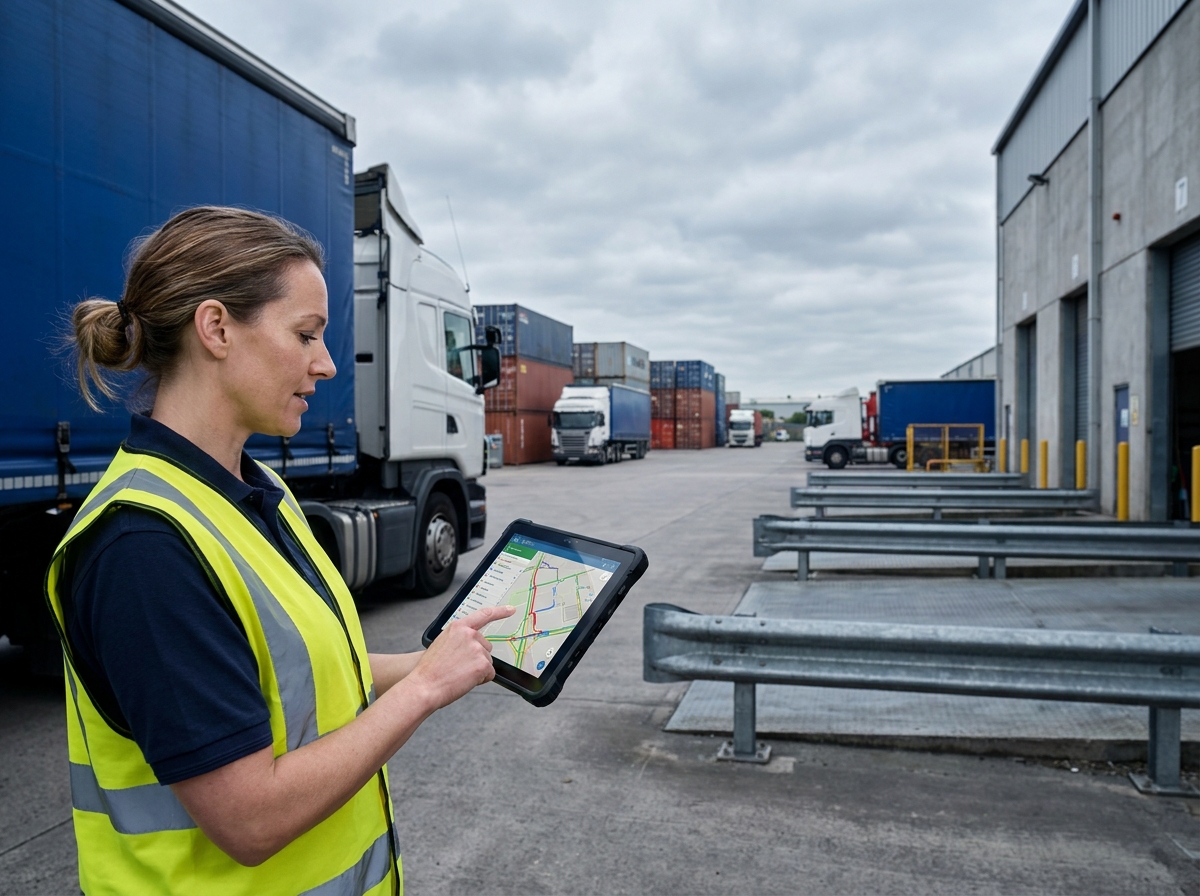
Heavy truck route planning: what general tools do not do
The difference between a public routing tool and a planning software tailored for heavy trucks lies in the consideration of vehicle constraints. A 44-ton articulated truck does not pass under the same bridges as a 3.5-ton van. Specialized software incorporates these parameters: height, total weight, number of axles, transported materials (ADR), local traffic restrictions.
A good heavy truck routing tool also calculates delivery windows while considering regulatory driving and rest times. A shorter route in kilometers may turn out to be longer in real time if the driver must take their mandatory break in a location without a suitable area, forcing them to extend their route to find secure parking.
Criteria for truly usable routing
- Consideration of the exact dimensions of the vehicle (height, width, weight per axle) to avoid recalculations on the road
- Integration of temporary traffic restrictions (prefectural orders, construction, weekend bans) updated regularly
- Positioning of rest areas and secure parking along the route, synchronized with mandatory break times
- Multi-step calculation that respects delivery slots without creating pressure on driving times
Without these elements, the driver finds themselves adapting the route in real-time, which mechanically produces additional kilometers.
Smart tachograph and traceability of route deviations
The gradual extension of European regulations on tachographs changes the game. Since 2023, new heavy trucks must be equipped with a second-generation smart tachograph that automatically records positions via geolocation. From July 1, 2026, certain utility vehicles over 2.5 tons used in international transport or cabotage will fall under the same system.
This evolution has a direct consequence on detours. Every deviation from the planned route becomes traceable and correlatable to recorded driving times. For the operator, this is a lever for factual dialogue with the driver: discrepancies are documented, not assumed.
For the driver, this traceability encourages reporting route problems upstream rather than silently bypassing them. When a planned route goes through an unsuitable road, reporting it to dispatch allows for corrections in planning for future trips. The occasional detour then becomes useful information, not an anomaly to hide.
European social regulation and realistic trips
The rules on driving times (Regulation EC 561/2006) impose 45-minute breaks after 4 hours and 30 minutes of driving and a minimum daily rest. When a trip is planned too tightly, the driver compensates by driving faster or taking risky shortcuts. A realistic trip reduces detours because it removes the pressure that causes them.
The inclusion of international light utility vehicles under European social regulations reinforces this logic. Operators managing mixed fleets (heavy trucks and utilities) must now apply the same planning principles to all their vehicles.
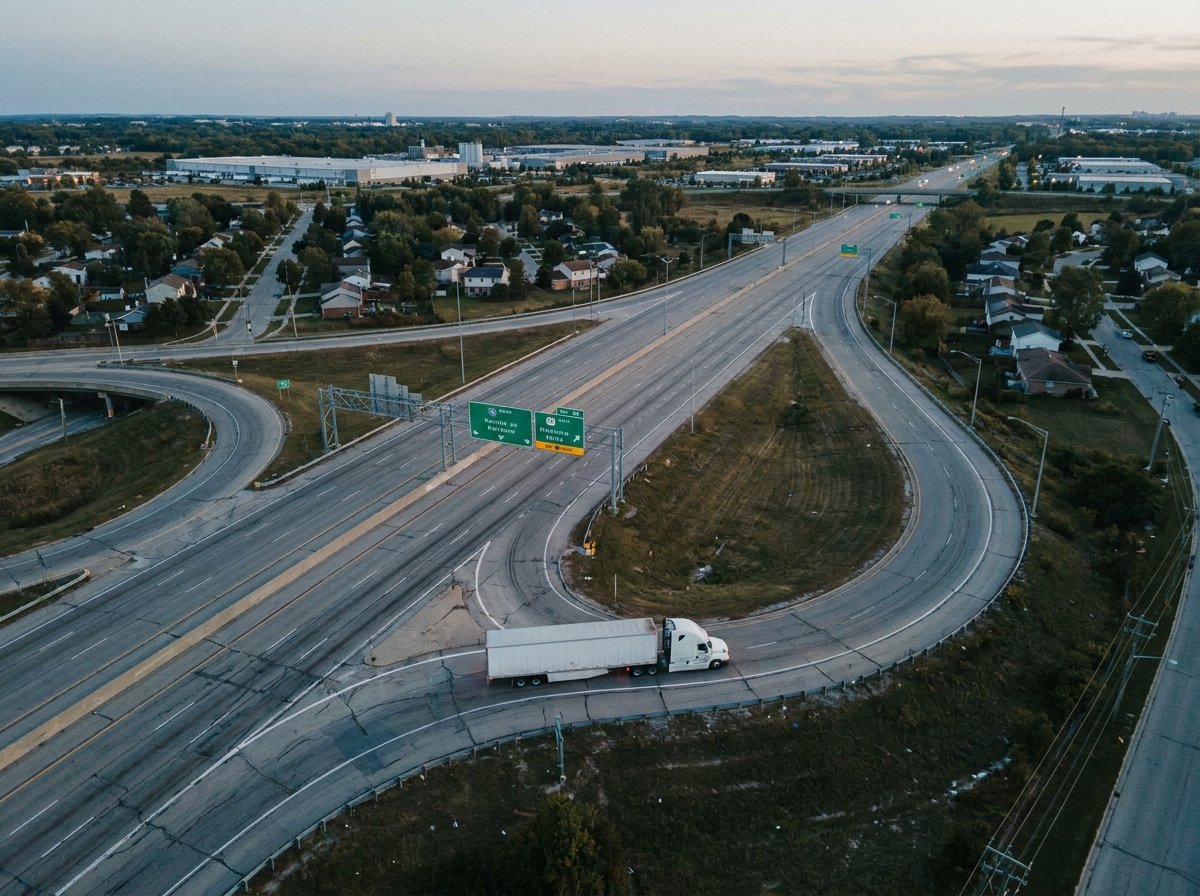
Getting an experienced driver to accept a new route
Proposing an optimized route to a driver who has been using the same road for years only works if the change is justified concretely. Displaying a gain in kilometers on a screen is not enough: the driver needs to know that the new route will not put them in difficulty (too narrow passage, lack of parking, inaccessible loading zone).
Fleets that successfully make this transition do so in stages. They start with the routes where the gap between the planned and actual route is most evident, document the gains obtained (fuel, time), and then gradually expand. The driver participates in the feedback: if the new route poses a practical problem, it is adjusted.
This approach avoids two pitfalls. The first: imposing a sudden change that generates resistance and bypassing. The second: allowing each driver to freely choose their route, making any fleet optimization impossible. The right balance lies between a clear framework (validated reference route) and a margin for adaptation that is signaled and documented.
Reducing unnecessary detours does not require a technological revolution. It relies on routing tools adapted to the real constraints of heavy trucks, traceability that transforms discrepancies into usable data, and a change management method that respects the drivers’ field experience. The most profitable kilometer is still the one not traveled.