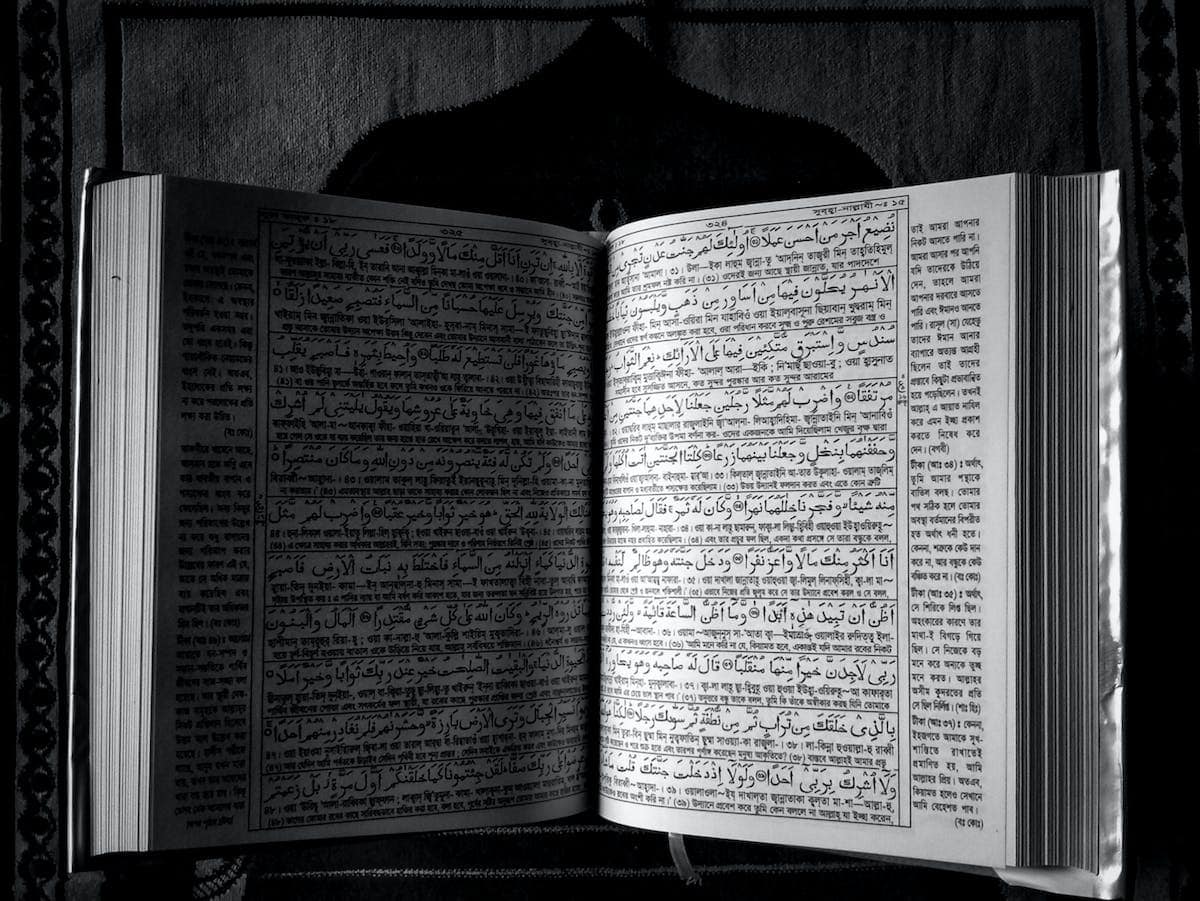
The Quran, the sacred book of Islam, holds immense importance for millions of believers around the world. Its organization, far from being arbitrary, reflects an ancient and profound wisdom. Divided into chapters and verses, each element of this structure carries a particular meaning and contributes to the richness of the message conveyed. This complexity, although bewildering for the uninitiated, is the result of a meticulous arrangement that, once understood, opens the door to a better understanding of Islam. Today, let us delve into the heart of these divisions of the Quran to explore their significance.
The Quran: a divine guide divided into surahs
The divisions of the Quran into surahs represent a fundamental structure that allows for a better grasp of the divine message. Each of the 114 surahs bears a title, usually derived from an important word or expression contained in the text. It is interesting to note that the order of the surahs does not always follow the chronology of their revelation to Muhammad.
Beyond this division into surahs, there are also the ‘juz of the Quran’, which are smaller sections of the Quran, used particularly to facilitate the recitation and memorization of the sacred text. These juz generally consist of about 20 pages and also serve as markers when one wants to study or read the Quran in portions.
The profound meaning of these divisions is revealed in several aspects. They offer a clear organization that allows believers to more easily access the specific content they are seeking. Each surah addresses particular themes such as faith, morality, individual and collective rights and responsibilities.
The divisions of the Quran play a crucial role in establishing a spiritual and ethical guideline for Muslim believers. They can thus orient their daily lives according to the teachings contained in each part of the holy book.
These divisions have a powerful influence on how the Quran is recited and memorized by those who actively dedicate themselves to it. The juz of the Quran serve as milestones facilitating gradual learning and regular recitation of the sacred text, thereby maintaining an intimate connection with God.
The divisions of the Quran into surahs and juz of the Quran are not merely an arbitrary structure, but they carry a deep meaning that guides believers in their spiritual quest. They also provide easy access to the richness of the divine teachings contained in this sacred book.

The structure of the Quran: a rational organization
In the Quran, the structure unfolds ingeniously with a decreasing order organization. The surahs are classified according to their length, from the longest to the shortest. This approach reveals a divine intention that transcends mere textual arrangement.
The decreasing order of the surahs establishes a progressive rhythm in the reading of the Quran. It offers believers a gradual and soothing spiritual experience, starting with the longer surahs that address fundamental themes before moving on to the shorter ones.
This ascending progression is also significant in the overall understanding of the Quranic message. The essential teachings are presented from the very first pages of the holy book, while more specific and detailed subjects appear gradually.
The structure by decreasing order also facilitates the learning and memorization of the Quran.
The varied themes of Quranic surahs
Beyond this structured organization, the surahs of the Quran cover a vast range of themes that reflect the richness and diversity of human experience. These different themes captivate the minds of believers and provide guidance for their daily lives.
The first major theme addressed in the surahs is that of faith and spirituality. The Quran encourages belief in a single God, developing an intimate relationship with Him, as well as cultivating qualities such as patience, forgiveness, and love for one’s neighbor. The surahs also invite us to reflect on our own existence and the ultimate purpose of our lives.
Another central theme is that of fundamental moral values. The Quran emphasizes the importance of exemplary ethical conduct by encouraging believers to be just, kind, compassionate, and honest in all their actions. It also highlights the respect for human rights, including those of women, children, and vulnerable individuals.
The surahs also address various practical aspects related to social life such as family relationships, marriage, child education, and the rules governing commercial transactions. They provide believers with a solid framework for living harmoniously within their community.
The importance of the divisions of the Quran for understanding
The importance of the divisions of the Quran in the understanding of the divine message cannot be underestimated. Each division offers a unique perspective and a depth of meaning that helps illuminate believers on different aspects of their faith.
The first division, that of the Makkiyah (surahs revealed in Mecca), emphasizes spirituality and the call to believe in a single God. These powerful surahs remind believers of the importance of cultivating an intimate relationship with Allah, turning to Him in difficult times, and trusting in His infinite mercy.
The Madaniyah (surahs revealed in Medina), on the other hand, focus more on the practical aspects of the daily lives of Muslims. They address subjects such as governance, the Islamic legal system, interpersonal relationships, and social responsibilities. These surahs thus provide a solid framework for living a balanced life based on the main teachings of Islam.
Another important division is that between short surahs (Mufassal) and long surahs (Musabbabat). The short surahs are often more impactful in their concise language, conveying strong and condensed messages that can have an immediate impact on the reader or listener.
The divisions of the Quran: a spiritual guide for believers
In a completely different vein, the long surahs offer depth and breadth in their narrative, exploring complex and detailed themes. They invite believers to a deeper reflection on the teachings of Islam and provide ethical guidelines to guide their behavior.
The Quran is also divided into thematic sections such as the surahs of repentance (Tawbah), which emphasize the need for sincere repentance for one’s mistakes and turning to Allah with humility. Similarly, the meditative surahs (Mufassil) encourage introspective contemplation and incite the search for inner truth.
Believers find a valuable spiritual guide in these divisions of the Quran. They are inspired by verses rich in wisdom that nourish their souls and strengthen their commitment to Allah. These divisions also serve as moral illumination by highlighting the importance of compassion, social justice, mutual respect, and other fundamental values for building a harmonious society.
It should be noted that each division has its unique rhythm in its melodious recitation when it is chanted or sung according to Muslim traditions.
The recitation and memorization facilitated by Quranic divisions
One of the most striking consequences of these divisions of the Quran is their influence on the recitation and memorization of the sacred text. Indeed, each division has its own rhythmic style, characteristic cadence, and particular intonations. This musical diversity allows the faithful to immerse themselves in a deep spiritual experience when reciting the Quran.
The recitation of the Quran is a precious art that requires mastery of the rules of Tajwid (correct recitation). The different divisions play an essential role in facilitating the learning and understanding of the text for students of Islamic sciences. For example, short surahs like Al-Fatiha are often taught to beginners as they provide a concise introduction to some key concepts of Islam.
These divisions also serve as mnemonic aids for those seeking to memorize the Quran in its entirety. The organized structure makes the task easier by dividing the text into distinctive parts, making learning more accessible and methodical.
The Muslim tradition places great importance on the memorization of the Quran. Hafizs (those who have memorized the entire Quran) are highly respected within the Muslim community as they are considered living guardians of the divine word. The divisions facilitate this ambitious effort by providing clear anchor points for navigating this vast sea of verses.
It should be emphasized that the divisions of the Quran are also used as markers during prayers. The shorter sections are often recited in the individual units of prayer, while the longer surahs may be reserved for special occasions or for tarawih (the night prayer during the month of Ramadan).
These divisions of the Quran constitute an essential aspect of the Muslim religious experience. They enrich the recitation and memorization of the sacred text by offering a clear structure and facilitating gradual learning. Beyond their practical utility, they convey a profound spiritual significance that nourishes the souls of believers and strengthens their bond with Allah.