When you come back from class at 7:30 PM to a kitchen that consists of two burners, a dented frying pan, and a cupboard’s worth of supplies, the question of what to eat is often settled with buttered pasta or a hastily bought sandwich. The problem isn’t the lack of recipes available online, but the gap between what they assume and the reality of a student studio.
An oven, a full set of cookware, unrealistic preparation times: these prerequisites don’t fit into daily life. This article starts from this real-world constraint to propose quick, delicious meals that are suitable for minimal equipment.
Cooking with two burners and a frying pan: the true student starting point
Most student cooking guides talk about budget and time. They often overlook an even more selective filter: equipment. No oven, a countertop the size of a cutting board, sometimes not even a colander.
Before choosing a recipe, you save time by identifying what you can actually do with your equipment. A frying pan and a saucepan cover the majority of quick meals: sautéing vegetables, cooking pasta or rice, searing a chicken breast, preparing a quick sauce.
Those looking for inspiration suited to these conditions will find concrete ideas on the page my idea for students on TwimmCook, with recipes designed for this type of limited cooking.
The reflex to adopt: read a recipe starting from the list of utensils, not the ingredients. If it calls for a blender, an oven, or a mold that you don’t have, move on to the next one without wasting time.

Quick meals in a frying pan: three basics that change the week
Instead of listing dozens of recipes, let’s focus on three meal formats that work in rotation over a week. They are all prepared in a frying pan, using common and inexpensive ingredients.
The one pot pasta frying pan version
Put the uncooked pasta directly in the frying pan with water, a can of crushed tomatoes, a drizzle of olive oil, and whatever you have on hand (olives, canned tuna, chopped onion). Cook covered over medium heat. Everything cooks in the same pot, so there’s only one dish to wash.
Feedback varies on the type of pasta: penne or fusilli absorb sauce better than spaghetti in this format. You can adapt based on what’s on sale.
The loaded omelette, an underrated complete meal
Two or three beaten eggs in the frying pan, and top with leftovers from the fridge: grated cheese, tomatoes, sliced mushrooms, a bit of ham. Cooking takes just a few minutes. Paired with a slice of bread, it’s a complete meal that fills you up.
Varying the toppings each night transforms the omelette into a different dish without changing the technique. Mozzarella and tomato one day, goat cheese and spinach the next.
Quick fried rice
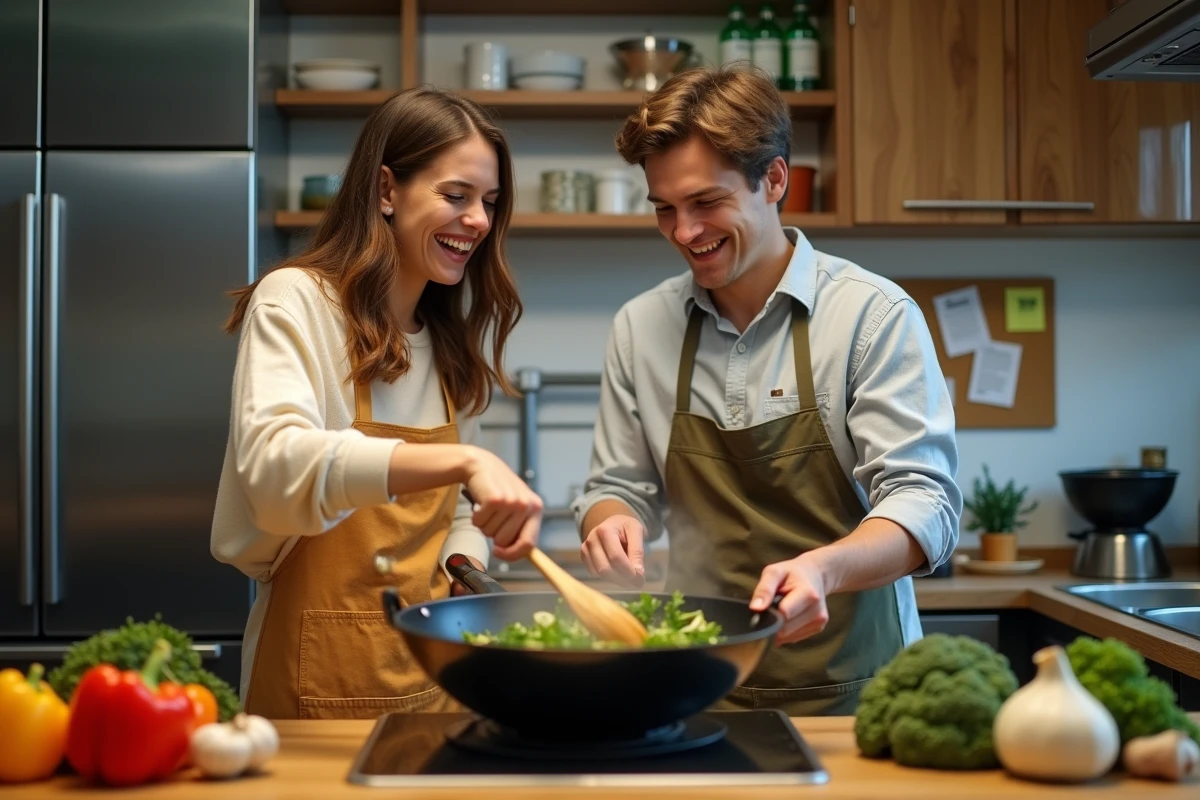
Fried rice works even better with rice cooked the day before (it sticks less to the pan). Sauté an egg, add the cold rice, soy sauce, and thawed frozen vegetables. The whole thing takes less than fifteen minutes.
Shopping and preparation: organizing the minimum to avoid cracking
The real student trap isn’t not knowing how to cook. It’s coming home to an empty fridge and defaulting to ordering takeout. The solution lies in one gesture: always keep five basic ingredients in the cupboard.
- Pasta or rice, the base of most quick dishes, with predictable cooking times and a negligible cost
- Eggs, versatile (omelette, fried egg on a bowl of rice, simplified carbonara)
- A can of crushed tomatoes or a tube of tomato paste, which turns any dish into a sauce
- Olive oil and soy sauce, two condiments that cover most seasonings
- A bag of grated cheese or a piece of Comté, for broiling in the pan under a lid
With these five items, you can improvise a meal without having planned anything. Fresh or frozen vegetables, meat, or fish can be added when the budget allows.
Batch cooking for studios
You don’t need to block off an entire Sunday. Cooking a large quantity of rice or pasta at once and storing it in the fridge allows you to cut preparation time in half on subsequent evenings. A Tupperware of cooked rice can be recycled into fried rice, rice salad, or as a side for a fried egg.
Preparing a base in advance reduces each meal to a maximum of ten minutes. You heat the pan, add the base, season. The action becomes a reflex rather than a chore.
No-cook recipes for evenings when even the frying pan is too much
Some evenings, fatigue cuts any desire to turn on a stove. That’s when no-cook recipes step in.
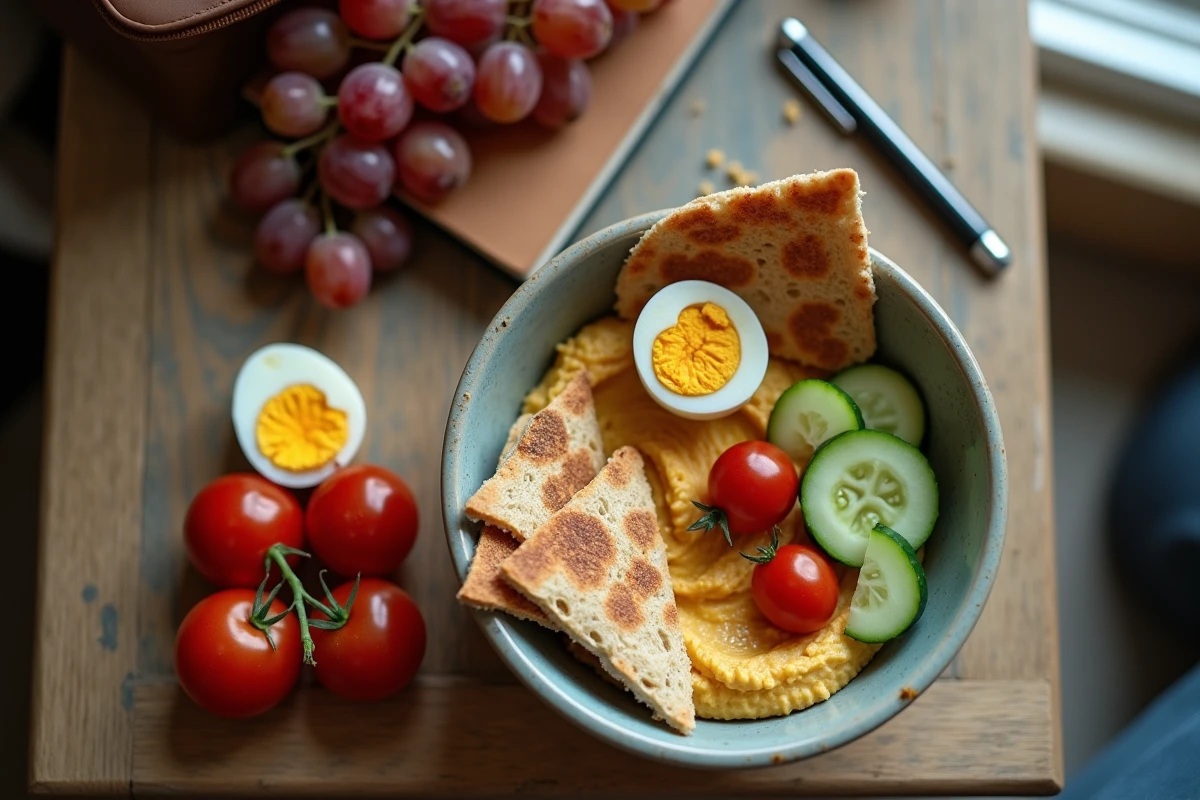
- Avocado toast: toasted bread (a toaster is enough), mashed avocado with a fork, a drizzle of lemon, salt, pepper, possibly a hard-boiled egg prepared earlier
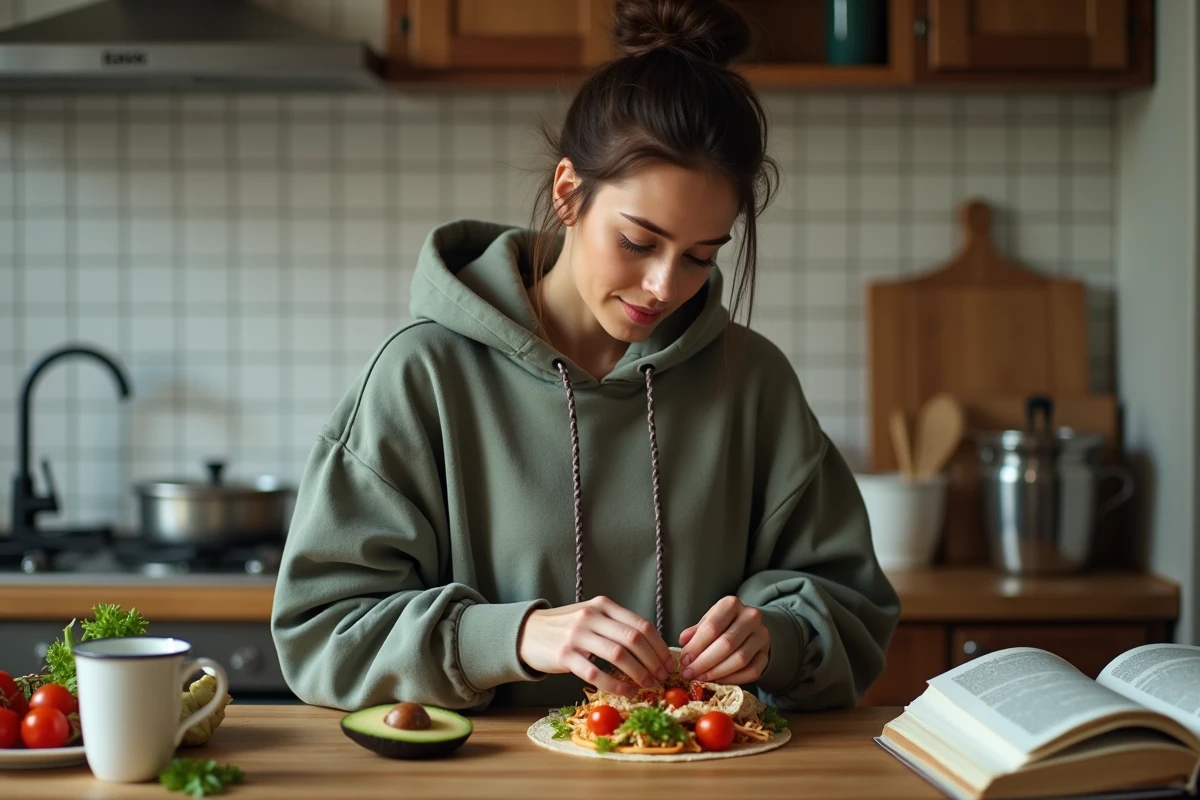
- Cold wrap: tortilla, cream cheese, salad, cold chicken or canned tuna, rolled in two minutes
- Sweet-salty muesli bowl: plain yogurt, granola, chopped fruit, a drizzle of honey, which works just as well for a light dinner as for breakfast
These options are not cheap fallback solutions. A well-stuffed wrap provides as much as a hot dish when you include proteins and raw vegetables. The trap would be to think that a quick meal must necessarily involve cooking.
The challenge for a busy student is not to learn to cook like a chef, but to find four or five reliable recipes that rotate with the available equipment and budget. A frying pan, a saucepan, five basic ingredients in the cupboard: the rest is just a matter of rotation and seasoning. The quickest meal is the one you don’t have to think about.