
The type A and type AC residual current devices equip all residential electrical panels, but they do not detect the same forms of leakage current. Comparing their technical characteristics helps to understand why the NF C 15-100 standard imposes one over the other depending on the protected circuits.
Unwanted tripping on type AC: how electronic power supplies change things
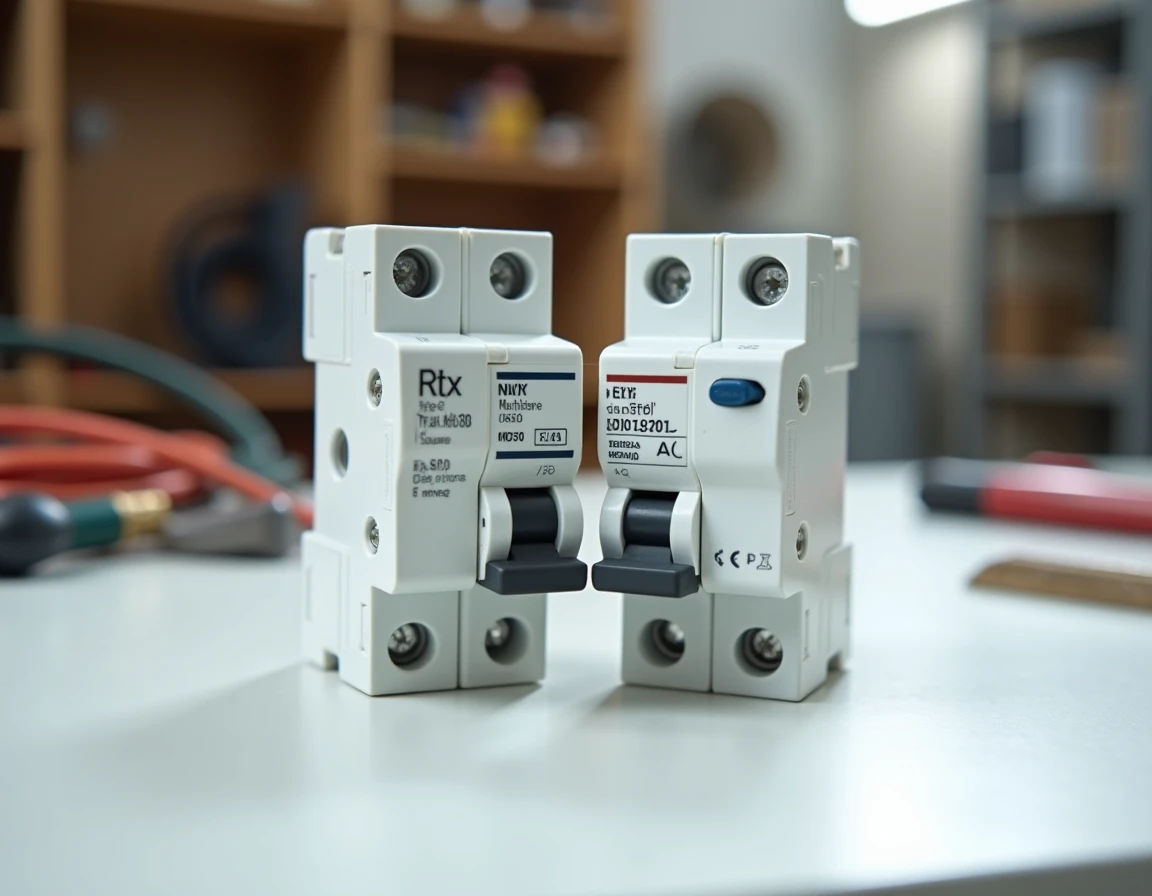
A type AC residual current device monitors sinusoidal alternating current leaks. It was designed for simple resistive loads: traditional pilot wire heaters, incandescent lamps, outlets powering devices without built-in electronics.
The problem arises with the multiplication of switch-mode power supplies. LED bulbs, dimmers, mobile device chargers, internet boxes: these devices generate leakage currents with pulsed direct current components. The type AC cannot interpret them correctly.
Several manufacturers and specialized guides have reported for a few years unwanted tripping of type AC on rows heavily loaded with electronics. The residual current device cuts off the circuit without any real insulation fault because the shape of the residual current falls outside its detection range.
This situation is leading more and more installers to favor type A for rows powering many sensitive electronic devices, even when the standard does not explicitly require it. Understanding the difference between type A and AC residual current devices allows for anticipating this type of inconvenience right from the design of the panel.
Comparison table type A and type AC: detected currents and concerned circuits

| Characteristic | Type AC | Type A |
|---|---|---|
| Detected leakage currents | Sinusoidal alternating only | Sinusoidal alternating + pulsed direct |
| Typical circuits | Lighting, simple outlets | Induction cooktop, washing machine, charging station, electronic circuits |
| NF C 15-100 requirement | Allowed on circuits without direct current component | Mandatory on at least one row (specialized circuits) |
| Current sensitivity in residential | 30 mA | 30 mA |
| Average price | Lower | Higher (moderate additional cost) |
Thus, type A covers a broader detection spectrum. It protects against leaks that type AC allows to pass, particularly those generated by speed-controlled devices or integrated rectifiers.
NF C 15-100 standard and distribution of residual current devices in the electrical panel
The NF C 15-100 standard structures the differential protection of the home by imposing a minimum number of dedicated rows. At least one type A residual current device is mandatory to protect certain specialized circuits.
Circuits required under type A
- The cooktop or stove (dedicated specialized circuit), due to the pulsed direct current generated by induction cooktops
- The washing machine, whose variable speed motor produces leakage with a direct current component
- The electric vehicle charging station, with additional requirements depending on the equipment (see next section)
Since the 2022 update, the trend in new housing is to increase the share of circuits placed under type A. The generalization of induction cooktops and charging stations is leading more professionals to reserve type AC for lighting and simple outlet circuits only.
Residual current device rating: a parameter often overlooked
Recent training resources remind us of a point rarely addressed in mainstream articles: the rating of the residual current device must be correctly sized. A 40 A or 63 A device is not chosen randomly. It depends on the sum of the assigned currents of the circuit breakers it protects, taking into account diversity factors.
An undersized rating causes abnormal heating and can lead to premature aging of the device, or even its destruction. This risk exists regardless of the type (A or AC) of the residual current device.
Electric vehicle charging station: when the choice A or AC is no longer sufficient
For charging stations, the classic opposition between type A and type AC proves insufficient. Recent technical guides recommend checking if the station includes 6 mA DC leakage current detection.
If this detection is absent from the station, a simple type A residual current device does not cover the risk of smooth direct current leakage. It is then necessary to combine a type A with a complementary 6 mA DC module, or install a specific residual current device (type B, F, or A EV depending on the manufacturers).
This point is crucial when installing a station in a renovation. The existing panel often has a standard type A, which necessitates checking the technical documentation of the station before validating the protection scheme.
Selection criteria for a residential installation
The distribution between type A and type AC in a panel is decided circuit by circuit. Three criteria guide this choice:
- The nature of the connected devices: any circuit powering a power electronics device (induction, variable speed motor, charging station) falls under type A
- Regulatory obligations: NF C 15-100 sets a minimum, but nothing prevents placing more circuits under type A to anticipate the evolution of equipment
- The budget: the additional cost of type A compared to type AC remains moderate, and increasing the share of type A reduces the risk of unwanted tripping as electronic devices multiply in the home
The sizing of the panel benefits from being thought out in the long term. A home equipped today with simple outlets may accommodate an induction cooktop or a charging station tomorrow. Planning for a type A on an additional row avoids having to redo the wiring later, for a price difference often absorbed with the first modification of the panel.